
Country Profile

GAPs Country Profile: Tunisia / Blog Posts

The European Border and Coast Guard Agency, a Main Actor of the Return Policy
by Hanen Ben Othman | University of Carthage and University of Sousse, Tunisia | hanen_benothman7516@yahoo.com
The European Border and Coast Guard Agency, commonly referred to as “Frontex” and hereinafter “the Agency” was created in October 2004 by Council Regulation (EC) n°2007/2004 to assist European Union Member States in managing and controlling their external borders. It is located in the capital of Poland Warsaw and constitutes one of over 35 decentralized agencies in the EU. But if there is one agency that has witnessed a steady growth in powers, size and funding, it is absolutely Frontex…
Migration in Tunisia: Status Quo and the Legal Point of View
by Hanen Ben Othman | University of Carthage and University of Sousse, Tunisia | hanen_benothman7516@yahoo.com
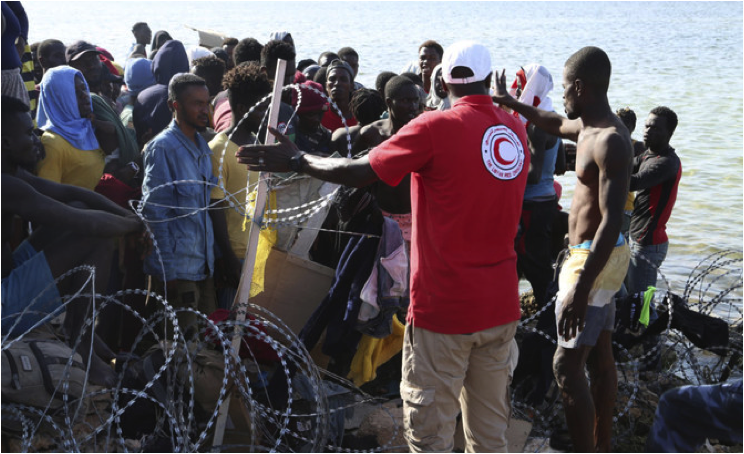
Tunisia is a Mediterranean country with 1,300 km of coastline stretching from the Western Mediterranean in the North to the Central Mediterranean in the East. Its sensitive location at the heart of the Mediterranean makes it a departure area of Tunisian and Subsaharan illegal migrants and a key partner for the European Union and its Member States. Traditionally a country of emigration, Tunisia has gradually become a country of transit of Sub-Saharan migrants towards the “European El Dorado”. Before reaching Tunisia, they cross Libya and Algeria, two countries opening on the Sahel countries such Mali, Niger, Chad and Sudan…
Mind the Gap
by Terry Martin | SPIA UG | t.martin@spia-europa.de
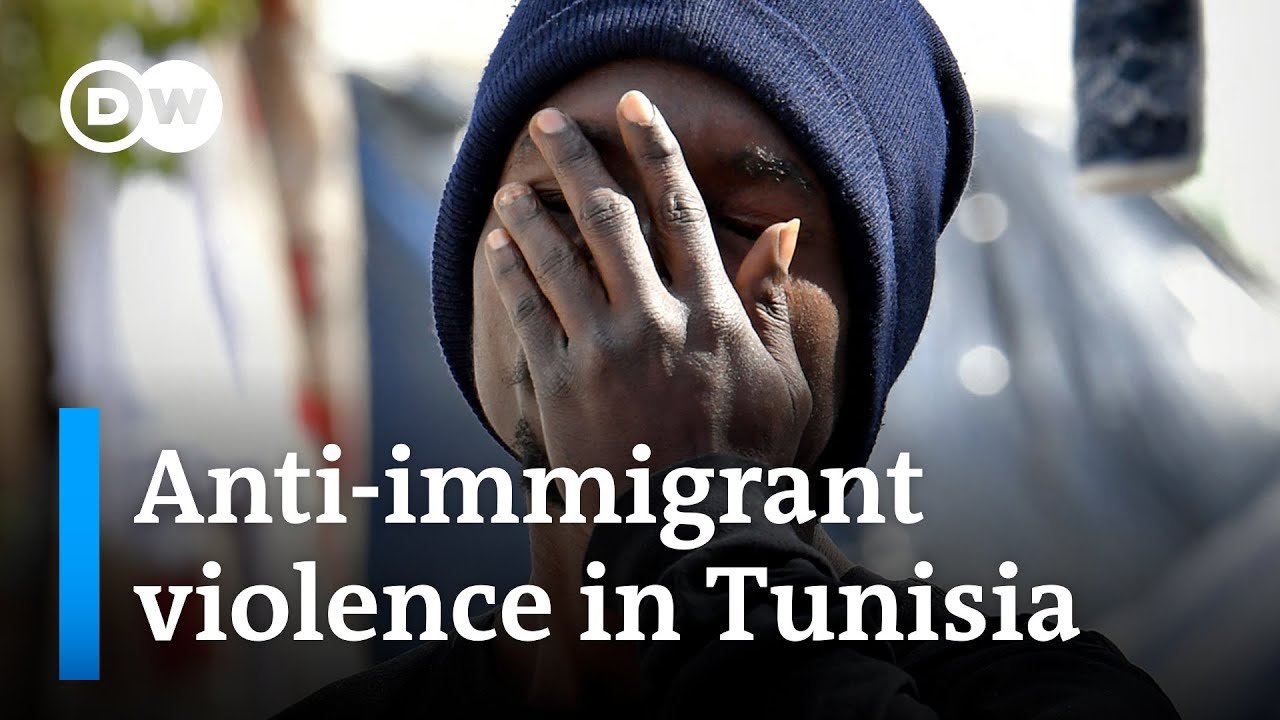
“It’s like a scary movie.” That’s how Pierre Sanga from Cameroon describes his experience in Tunisia amidst an upsurge in anti-migrant sentiment. Mr. Sanga’s predicament was highlighted in a recent television report by DW News, Germany’s international broadcaster, where I regularly work as an anchor. (Report, intro, and interview with the Tunisia Director of Human Rights Watch here.) At the end of the report, Mr. Sanga is seen standing on a beach looking across the Mediterranean Sea to Europe. He explains with resignation what it is that motivates him and millions of others to up…
GAPs Country Profile: Tunisia / Publications
This survey country report analyses the post-return practices and experiences of 164 Tunisians returned from European countries as part of the GAPs WP8 survey (2025). It first situates return within Tunisia’s broader migration context and details the non-probability survey design implemented across 66 sites in 18 governorates. Findings show that return is largely shaped by external constraints—especially deportation, failed attempts to secure legal status, and arbitrary detention—rather than voluntary choice, and that more than two-thirds of respondents experienced detention abroad. Socio-demographic profiles point to young, predominantly male returnees with low-to-medium education, concentrated in low-skilled work and facing persistent economic vulnerability despite incomes often just above the minimum wage. Reintegration is hindered by limited institutional and financial support: most respondents self-financed their return, a minority accessed assisted return or post-return aid, and access to credit and business start-up support is very restricted. Psychosocial measures reveal moderately high levels of hope and resilience alongside notable depressive symptoms, indicating that individual coping resources coexist with significant emotional distress in a structurally adverse environment. The report concludes that effective reintegration in Tunisia requires better-aligned and better-coordinated return programmes, stronger psychosocial and socio-economic support, and integration of return policies into broader national development and welfare strategies.
Tunisia, due to its geographic proximity to Europe and historical emigration trends, serves as a strategic case study to examine the Return Migration Infrastructures (RMI). The Tunisia RMIs include a wide range of institutions, actors, emerging technologies, and ad hoc procedures that govern and facilitate the return of Tunisian nationals abroad—both voluntary and coerced. The study combined desk research, including analysis of secondary sources such as national statistics, surveys, policy briefs, and reports from international organisations, along with insights from fieldwork on returnees. However, accessing data on return migration in Tunisia, worsened by coerced repatriations of Sub-Saharan Africans, remains obscure due to political sensitivity, limited transparency, and restricted access.

This report explores return migration governance in the African and Middle Eastern regions and the role of the EU by looking at the governance of coerced returns from Turkey, Lebanon, Jordan, and Iraq to Syria; from Morocco, Tunisia, and Libya to Nigeria; and from Iran and Turkey to Afghanistan.
This study is situated in a CONTEXT where the migration management of the African and Middle Eastern host countries under study has increasingly focused on return.